Ingredient GuidesClam
Wondering about the difference between littleneck clams and steamer clams? How to clean clams before you cook them? Are clams good for you? Well, look no further! Just follow this clam guide and you’ll find everything you need to know about your favorite bivalve!
Print 

The humble clam has much to offer the home cook. It’s a sustainable, nutrient-rich food that’s more affordable than much of what you’ll find at the fishmonger. Knowing a thing or two about clams, from what to look for to how to prep them, can help you make the most of these briny bivalves.
Once you’ve got your clams in the kitchen, the options for how to cook them are endless. Simple spaghetti and clams is perfect for beginners (and don’t be surprised if the kids like it, too). There are East Coast classics, such as clam chowder, clams casino, grilled clams, and steamers with drawn butter. And plenty of dishes from far away places are worth exploring, too, such as paella and ceviche.


HOW TO CLEAN CLAMS
Fresh clams are alive, or at least they should be when you pick them up at the market. Depending upon where you purchased the clams or if you dug them yourself you may need to spend a little time cleaning them.
Clams can be gritty creatures, full of the sand they filter for their food. These days, most commercially sold clams are held in tanks after they’re harvested, where they “purge” the sand before they head to market. In this case, no need for extra cleaning.
If you’re digging clams yourself (or buying from a small purveyor who may not clean them for you), soak them in a bowl of ocean water or cool, salted water for about 30 minutes. Then, rinse well before cooking, sloughing off any dirt with your thumbs.
HOW TO STORE CLAMS
If you aren’t cooking your clams right away, put them in a bowl covered with a wet towel in the fridge. It’s best to cook them sooner rather than later (I prefer to cook mine within 24 hours of purchasing them) though they should keep for up to four or five days.
HOW TO PREP CLAMS FOR COOKING
Before you cook your clams, look them over to make sure the shells are closed. Tap any open ones on the counter. If they close up, they’re good to go. If not, toss them, along with any cracked or broken ones. Any clams that don’t open once they’re cooked, should be thrown out, too. It’s said that one bad clam might spoil the whole pot.
COMMON TYPES OF CLAMS
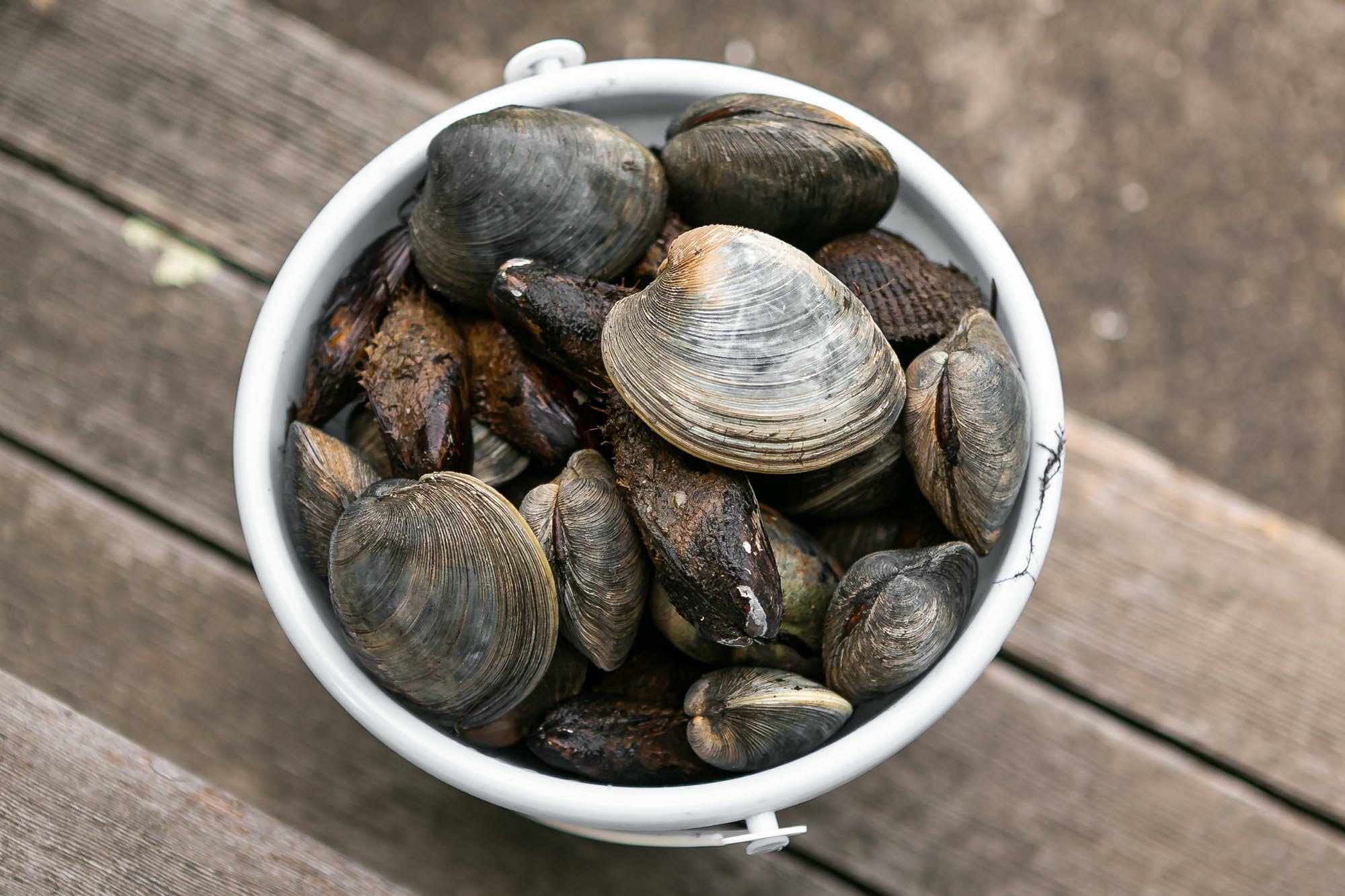
While there are more than 150 different edible clams across the globe, just a handful or so are typical for American seafood shops. What’s available varies based on where you live, but below is a quick snapshot of the most common types of clams.
- STEAMERS: Also called the mano or piss clam, a steamer is considered a soft shell clam because its exterior is more delicate than other varieties. Common along the East Coast, steamers are often what you’ll find in a bucket of clams alongside drawn butter. They’re tasty cooked into soups and stews, steamed, fried, and tossed with pasta.
- LITTLENECKS AND TOPNECKS: Hard shell clams vary by size with versatility in cooking. Littlenecks and Topnecks are on the smaller end of the spectrum and good for everything from grilling, to pasta, to cioppino.
- CHERRYSTONE AND CHOWDER: Cherrystone and Chowder clams are also considered hard shell clams, but they are bigger and meatier, which makes them better for chowder than for pasta dishes.
- MANILA: A smaller, sweeter hard shell variety you’ll find along the Pacific Coast. Like Littlenecks, these clams are versatile, good for grilling, pasta, chowder, or steamed and served with butter.
- RAZOR: As the name implies, these clams are long and slender, like a straight razor. You’re probably more likely to find them on the menu of a restaurant than a fish shop, but if you do, they’re sweet, delicate, and tasty steamed or grilled.
- MAHOGANY: A slow growing clam found in the Northeast that’s about the size of a Cherrystone. Its firm, meaty texture makes it best to chop up for chowder.
BOTH WILD AND FARMED CLAMS ARE SUSTAINABLE!
You might be surprised to know that the majority of clams in the US are farmed. While aquaculture doesn’t always have a stellar reputation, farmed clams are considered a sustainable choice.
Clams are filter feeders and can actually improve the quality of the water in which they live. As proof positive of their sustainability, Seafood Watch, a consumer guide on choosing sustainable seafood, rates every variety of clam, both wild and farmed, to be a “Best Choice” or “Good Alternative.”
ARE CLAMS HEALTHY?
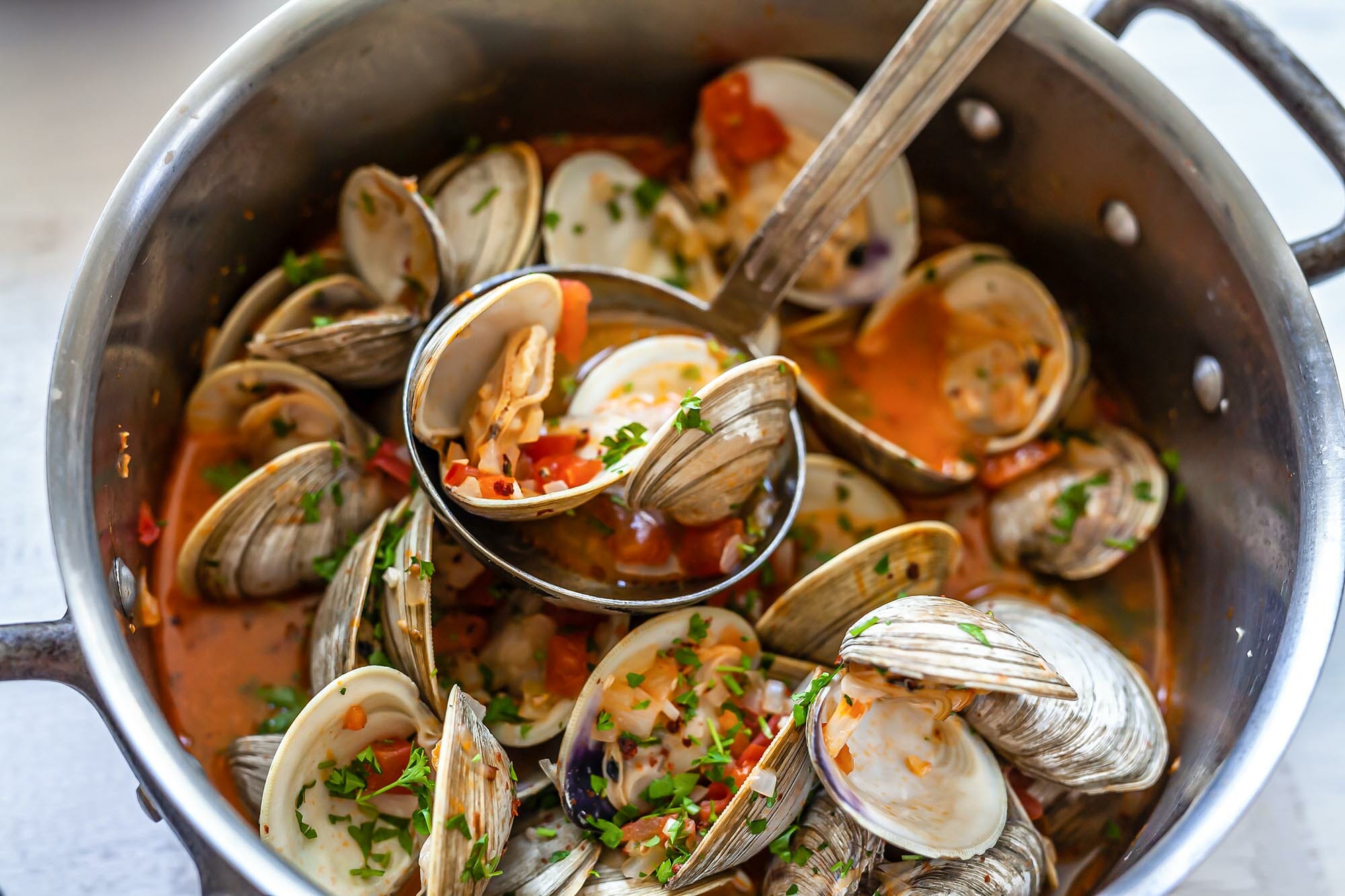
Yes! Clams are packed with nutrition. A three ounce portion (about 12 medium clams) comes in at under 130 calories with 22 grams of protein and less than two grams of fat.
Clams deliver those good-for-you omega-3 fatty acids and a big dose of iron and vitamin B12 (a nutrient that can be hard to come by). Keep in mind, though, that many popular preparations of clams, from creamy chowders to clams with melted butter, mean added saturated fat and calories.
9 DELICIOUS CLAM RECIPES TO TRY!
- Brothy Clams with Tomatoes and Spanish Chorizo
- Manhattan Clam Chowder
- How to Cook and Eat Steamer Clams
- Frutti di Mare Seafood Salad
- Baked Stuffed Clams
- New England Cioppino
- Angel Hair Pasta with Clams, Cherry Tomatoes, and Basil
- Linguine with Clam Sauce
- New England Clam Bake
Follow me on Pinterest
Products We Love

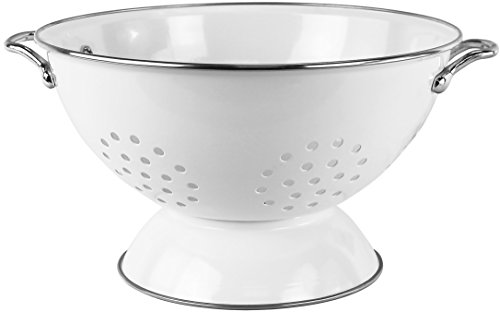
Enameled Colander
$26.00 on Amazon Buy
This post may contain links to Amazon or other partners; your purchases via these links can benefit Simply Recipes. Read more about our affiliate linking policy.


Katie Morford is the Nutrition Editor for Simply Recipes. She is a writer, registered dietitian, and author of three cookbooks: PREP: The Essential College Cookbook, Rise & Shine: Better Breakfasts for Busy Mornings and Best Lunch Box Ever, which was nominated for an IACP award. Her work has been featured in Family Circle, Better Homes and Gardens, Health, Real Simple, Oprah, Parents, Self, the San Francisco Chronicle, and the New York Times, among others. Katie lives in San Francisco with her husband and three daughters.
More from Katie